

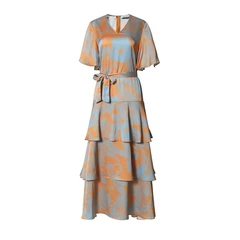


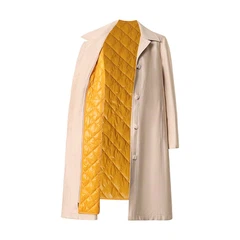
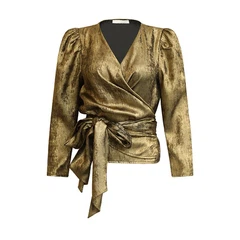

Dresses are a must-have item in women's wardrobes in spring and summer. Different fabrics not only affect the comfort of wearing, but also determine the texture and style of the dress. The following are 8 common dress fabrics in spring and summer and their advantages and disadvantages to help you better choose the fabric that suits you.
Chiffon 🌸
Advantages: light texture, soft touch, good breathability, good drape, elegant and comfortable, good wear resistance, not easy to pilling, stable size and not easy to wrinkle, beautiful dyeing and not easy to fade, anti-static.
Disadvantages: too light and easy to let light through, and will stick to the skin after sweating.
Tencel Lyocell 🌿
Advantages: derived from wood, green and environmentally friendly, smooth and skin-friendly, effective antibacterial, the strongest among cellulose fibers, drape with silky luster, and good dimensional stability.
Disadvantages: the higher the content, the easier it is to hook, can not be exposed to the sun, can not contact acidic or alkaline detergents, and it is easy to pill after multiple washings.
Linen 🌱
Advantages: breathable and dry, maintain electrolyte balance to reduce perspiration, radiation protection, anti-static, antibacterial and anti-allergic.
Disadvantages: easy to wrinkle, poor dimensional stability, and if the textile process is not good, it will feel hard against the skin.
Ramie 🌿
Advantages: hollow fiber is light, absorbent and quick-drying, with high tensile strength and very durable.
Disadvantages: poor elasticity, easy to wrinkle, aging and fragile after exposure to the sun.
Cotton 🌸
Advantages: good water absorption and breathability, skin-friendly and comfortable, good warmth retention, environmentally friendly, good for the human body.
Disadvantages: easy to wrinkle, difficult to sort after wrinkling, easy to shrink, easy to deform, easy to get hairy and difficult to remove after getting hairy.
Knitted fabrics 🧵
Advantages: strong texture, skin-friendly and comfortable, good drape, not easy to wrinkle, easy to wash and care, good elasticity if containing spandex.
Disadvantages: easy to deform after long-term wear/washing, cannot be hung for drying, and the yarn is not good and easy to pilling.
Satin 🌸
Advantages: smooth and soft, gorgeous luster, good breathability, soft and drape, cool and comfortable, very skin-friendly.
Disadvantages: easy to snag, thin satin is easy to wrinkle, easy to fade and shrink.
Acetate fabric 🍇
Advantages: feel close to silk, delicate and smooth, light and comfortable, fast heat dissipation, cool to the skin, anti-static, not easy to adhere to dust, not easy to breed bacteria and insects, heat-resistant and wear-resistant, easier to take care of than silk.
Disadvantages: expensive, the higher the content, the more expensive.
Silk fabric 🌸
Advantages: rich in protein fiber, skin-friendly and nourishing, sweat-absorbing and heat-dissipating, anti-ultraviolet, rich in amino acids, antibacterial skin care, promote skin metabolism.
Disadvantages: expensive, easy to fade, easy to wrinkle, difficult to take care of, easy to deform.